
Inside JPMorgan's Tech100: Bezos, Amodei and the Billionaire Who Wasn't There
Welcome, Weekenders! In this newsletter:
• The Big Read: Midjourney’s David Holz was AI’s creative rebel. Then Google pounced.
• Plus, Recommendations—our weekly pop culture picks: “Catching the Codfather” “American Reich” and “For All Mankind”
The only thing more fluid these days than which AI company has a better model is which ultraexclusive conference techies lust to be invited to.
And JPMorgan Chase’s Tech100, at the private Yellowstone Club in Montana, has been climbing the list.
This year’s confab was held Wednesday through Friday. I am told by numerous attendees it was a bustling affair—with more mingling than usual because the lack of snow kept everyone off the slopes (also, they were apparently interested in longevity entrepreneur Bryan Johnson’s helmet for measuring brain age, which had a stacked sign-up list).
The Bezoses were the couple of the conference. Jeff kicked off the programming discussing the massive opportunity he sees in the orbital economy that he is chasing with Blue Origin. Joined by NASA Administrator Jared Isaacman, he spoke about data centers in space, the benefits of a permanent base on the moon and Blue eventually going public. Lauren talked about how AI has helped her organize her thoughts, as well as her desire to spend less time on social media, on a panel entitled “When Intelligence Scales: Who Wins, Who Loses, What’s Next?” Jeff was in the front row supporting her.
Jack Dorsey (going by “Block Head” for his speaker title) got attention by discussing how using a coding agent called Goose for a few hours every morning led to his realization that he could nearly halve his company’s workforce. Ali Ghodsi, CEO of DataBricks, discussed a similar habit and how it’s pressuring his team.
Beaming in from a private plane, Jared Kushner, Affinity Partners CEO, discussed the state of the Iran war with Steve Witkoff, the U.S. special envoy to the Middle East, who also tuned in virtually. They tried to reassure the audience that negotiations about ending the war with Iran would begin soon. (Jared, of course, is the brother of Thrive Capital’s Josh Kushner, who also attended, along with his wife, entrepreneur and model Karlie Kloss.)
One of the lesser-known speakers was Matt Mahan, the 43-year-old mayor of San Jose who has jumped into California’s gubernatorial race with a lot of tech backing. (Full disclosure: Matt and I have been friendly since college.) He was on a panel with one of his opponents in the race, Congressman Eric Swalwell. For both of them, this gathering surely was not a bad place to raise some money.
Also on the agenda: Robinhood CEO Vlad Tenev, who compared gambling to the risk he took as an entrepreneur; Michael Dell, interviewed by his pal Egon Durban, co-CEO of Silver Lake; and Anthropic CEO Dario Amodei, these days a ubiquitous fixture on the tech conference circuit. Amodei took the stage several hours before The Information’s scoop about his latest IPO’s timing, and he stuck to his script about discussing how humans will struggle to contain AI. (He did not mention his standoff with the U.S. government.)
The attendee list included many of the tech folks who frequently turn up at Sun Valley, like Travis Kalanick, who’s back in the spotlight with his (sorta) new company, Atoms; Netflix co-founder Reed Hastings, giving up a few days on his own private ski mountain; and Daniel Nadler, founder of OpenEvidence. Musician Katy Perry and Justin Trudeau, former prime minister of Canada, were also there. In case you missed it, they are dating.
The elephant who was not in the room: Elon Musk.
Several attendees told me it was striking how little his competitors discussed him. Bezos, for instance, didn’t directly bring up SpaceX while discussing Blue, a far smaller competitor. The same was true of a conversation between Uber’s Dara Khosrowshahi and Waymo co-CEO Tekedra Mawakana about self-driving cars; both companies are Tesla rivals.
Sting was the special music guest, and attendees apparently had a blast rocking out to the 74-year-old. No one seemed to miss the snow.—Jessica E. Lessin
Weekend’s Latest Stories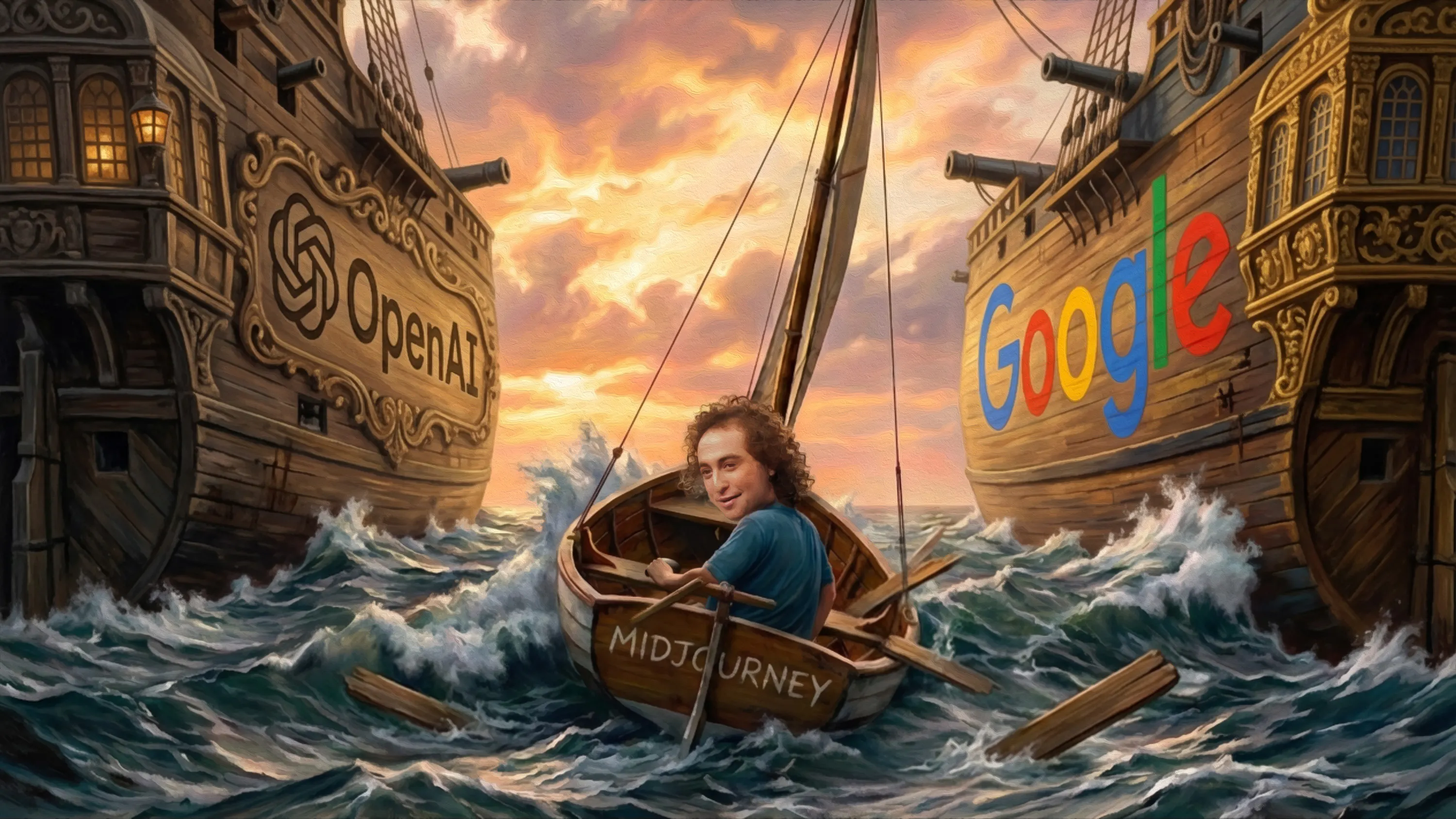 Midjourney Is Profitable and Chasing Hardware Dreams. But Can It Survive Google?
The competition around founder David Holz has intensified, and his plans greatly exceed his initial creation, an AI image-making tool beloved by artists. He may even have to do the once unthinkable: accept venture capital.

Listening: “Catching the Codfather”
Ever since ye olden days, the American dream has involved a sense of rebelliousness—especially when it has felt like the government’s thick fingers are pressing down on everyone’s livelihood with regulations and taxes.
Fleeing life as a teenager in a Portuguese monastery, Carlos Rafael seized on that mentality as soon as he set foot in New Bedford, Mass., in the 1970s. In fact, he went full steam ahead with it, establishing himself as a flannel-clad, chain-smoking fishing mogul. Decades on, he had a thriving legitimate business in scallops, haddock, flounder and, yes, cod—and an illegitimate black market that extended across New England and into some of the area’s finest restaurants. The scheme involved crooked cops, the mafia and two sets of books for Carlos Seafood Inc.: one marked just “cash” and kept in a locked drawer. As New England’s fishing industry struggled, federal authorities wondered how Rafael continued to prosper.
Rafael, titular subject of “Catching the Codfather,” is many things: “a folk hero, a crook, a righteous rebel [and] a selfish con man,” acknowledged Ian Coss, the Boston Public Radio reporter who hosts the podcast and previously did another excellent series on Boston’s Big Dig. “I believe in order to judge the crimes of Carlos,” he continued, “you also have to judge the whole system he chose to break.”—Abram Brown
Reading: “American Reich” by Eric Lichtblau
“American Reich” belongs to a discomforting subgenre of nonfiction in which a book is both completely engrossing and totally enraging. In the case of “American Reich,” the first quality is a testament to the author’s talent at narrative reporting: Lichtblau, former denizen of The New York Times’ Washington bureau, has shared in two Pulitzer Prizes, including one for revealing the NSA’s Bush-era eavesdropping. With his books, Lichtblau has directed his attention on Nazis—mostly their past. “American Reich” examines how white supremacism stretches into the present, finding a fertile breeding ground in Orange County, Calif., home of both Disney World, the “Happiest Place on Earth,” and some of the most hateful people on Earth: As I said, the subject matter is infuriating.
Lichtblau largely concentrates on the 2018 murder of a gay teen, Blaze Bernstein, at the hands of a classmate, Samuel Woodward, who belonged to the Atomwaffen Division, a neo-Nazi group. Lichtblau does take the time to step back and show how the Atomwaffen fit alongside other similar groups, many of which have been rejuvenated in recent years. Even more broadly, he connects Woodward to an even broader, more troubling trend, in which violent hatred has “become the sad state of normalcy in modern-day America.”—A.B.
Watching: “For All Mankind”
Uh, Houston—we’ve got a dead body.
Apple TV’s space race drama is back for its fifth season, and life for the Mars colonists has changed considerably: About a decade has passed since the last season, and the Red Planet now has cornfields, a Domino’s and, as always, plenty of potboiler drama, including what appears to be the colony’s first murder. You can read more about the latest season and how the showrunners are managing those time jumps in my story. (It also includes some other sci-fi picks for spring 2026.) —A.B.