
CES 2026: Vertical RGB pixels arrive to solve OLED text fringing issues
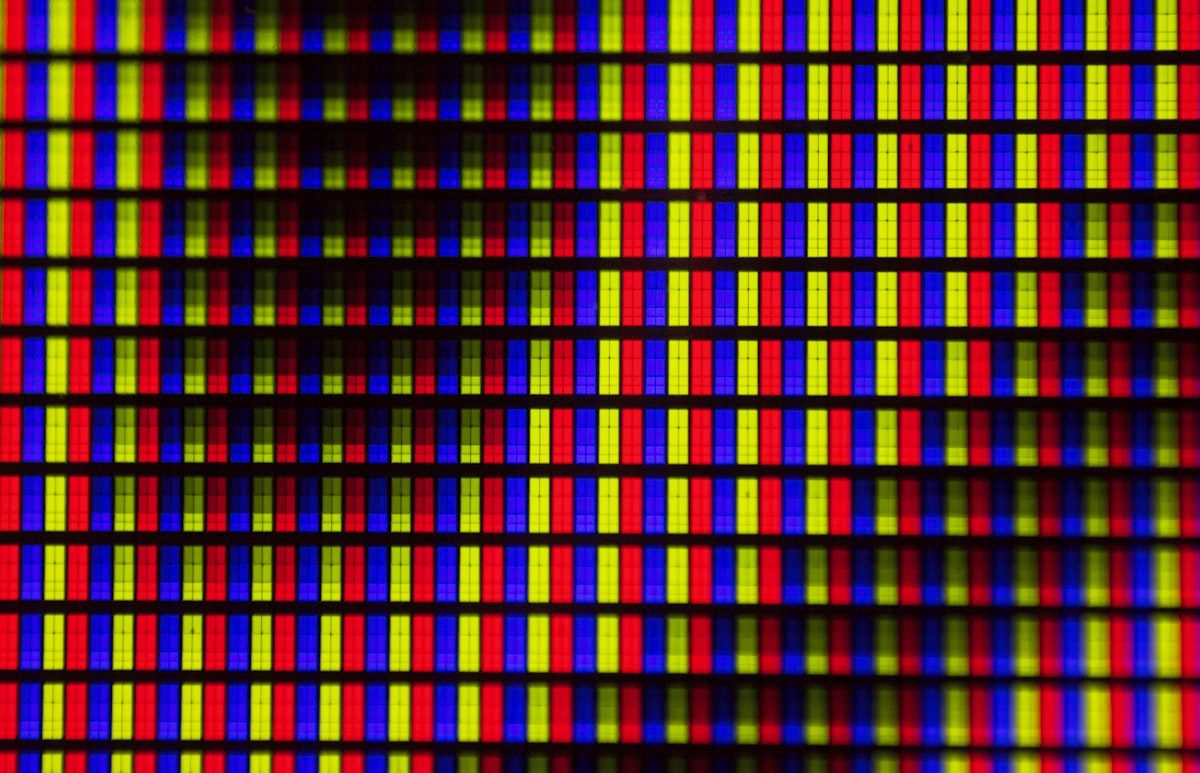
LG Display and Samsung Display have introduced vertical RGB stripe subpixel arrangements in new OLED panels to enhance text clarity on gaming monitors. Asus and MSI plan to launch models with this Stripe RGB technology this year, targeting issues in ultrawide displays.
Samsung Display announced earlier this month the start of mass production for the world’s first 34-inch 360 Hz QD-OLED panel equipped with a V-Stripe RGB pixel structure. This design orients subpixels vertically, rather than in a V shape as the name might suggest. The vertical alignment addresses previous limitations in subpixel rendering seen in Pentile OLED displays, where non-standard arrangements led to concerns over text readability.
The V-Stripe structure specifically improves the clarity of text edges. Samsung Display states that it makes the panel ideal for users engaged in text-intensive tasks such as document editing, coding, or content creation. This enhancement proves particularly relevant for ultrawide OLED panels, which have historically faced challenges with sharp text rendering due to their subpixel layouts.
Samsung Display has supplied these 34-inch 360 Hz QD-OLED panels to seven global monitor manufacturers, including ASUS, MSI, and Gigabyte, since December 2025. Among the recipients, Asus promotes its ROG Swift OLED PG27UCWM, ROG Swift OLED PG34WCDN, and ROG Strix OLED XG34WCDMS as incorporating Stripe RGB technology. MSI similarly highlights its MEG X and MPG 341CQR QD-OLED X36 monitors with the same feature.
Separately, LG Display announced last month plans to debut the world’s first 27-inch 4K OLED monitor panel featuring an RGB stripe structure and a 240 Hz refresh rate at CES in Las Vegas. Previously, LG Display relied on WOLED technology for TVs and gaming monitors. WOLED incorporates an extra white subpixel or arranges RGB pixels in a triangular pattern, which differed from standard RGB layouts.
The new RGB stripe panels from LG Display align subpixels in vertical RGB stripes. LG Display describes them as optimized for operating systems such as Windows and for font-rendering engines. This optimization ensures excellent text readability and high color accuracy. The panels also deliver optimal performance in FPS games, combining improved text handling with gaming capabilities.
At CES, LG Display showcased Primary RGB Tandem 2.0 alongside the RGB stripe panels. The company defines Primary RGB Tandem 2.0 as an advanced version of its proprietary Primary RGB Tandem technology. This technology generates light by stacking the three primary colors—red, green, and blue—in independent layers. Such stacking addresses one limitation of traditional OLED panels: lower brightness compared to competing technologies.
Tandem OLED approaches dramatically increase panel brightness. Samsung Display achieves this in its QD-OLED panels through quantum dots, which enhance light output. LG Display, in contrast, employs stacked layers in its Primary RGB Tandem method. Asus states that its PG27UCWM monitor integrates both an RGB stripe panel and a Tandem OLED panel, although it remains unspecified whether this uses the 2.0 version.
LG Display projects that Primary RGB Tandem 2.0 will enable monitor displays to achieve a peak brightness of up to 1,500 nits. For OLED TVs using the technology, peak brightness reaches up to 4,500 nits. The company previously demonstrated the 1.0 version of Primary RGB Tandem in the LG G5 TV, providing a baseline for the advancements in the 2.0 iteration shown at CES.